2025-04-25 06:01
- 51:24
(TRANSCRIPT IN ENGLISH BELOW) Så blev Eurovision 2024 i Malmö den mest kaosartade och skandalsomsusade tävlingen någonsin i Eurovisions historia.
Det har blivit dags för final i Eurovision Song Contest 2024 och snart kommer topplocket att gå på både artister, publik och demonstranter i Malmö.
En omdebatterad diskning skapar rubriker i stora delar av världen, flera länder hotar att hoppa av och många undrar nu om det kommer att bli en final överhuvudtaget.
Vad var det som ledde till diskningen av nederländernas Joost Klein? Hör vad som syns i den omtalade filmen backstage – och hur nära det var att det blev en helt annan vinnare om Nemo varit med utom tävlan.
I programmet hörs intervjuer med:
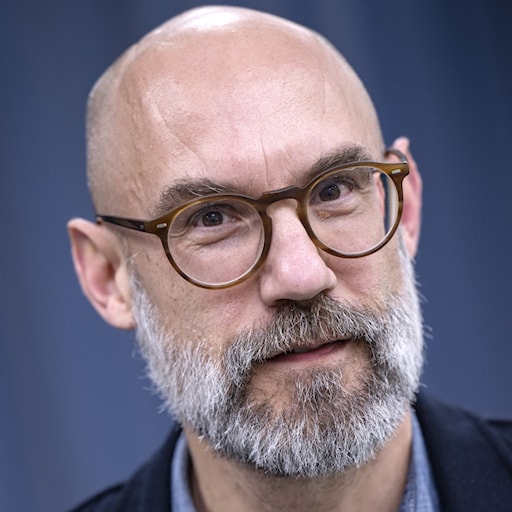
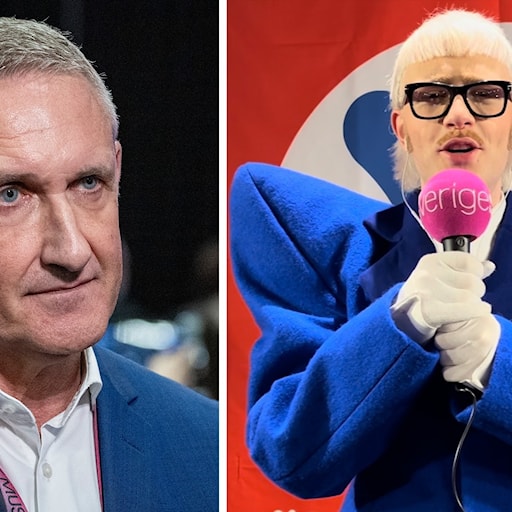
Martin Österdahl, Executive Supervisor EBU
Edward af Sillén, Regissör & manusförfattare
Ebba Adielsson, Exekutiv Producent SvT
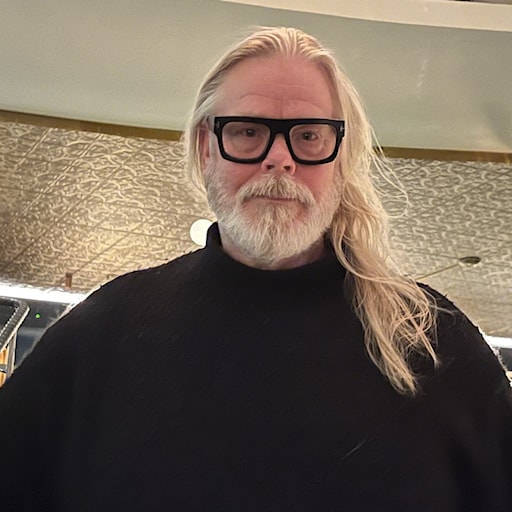
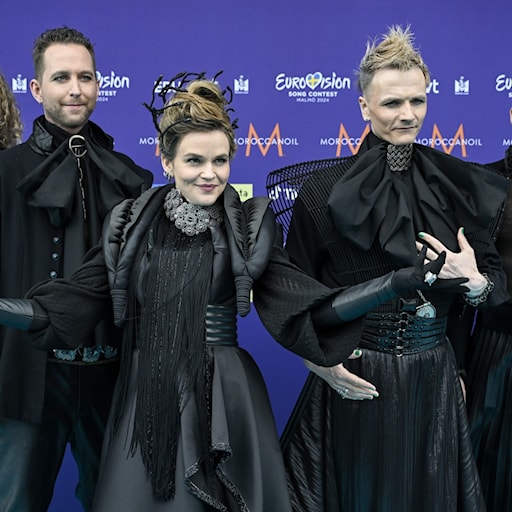
Magnus Börmark, Gruppen Gåte Norge
Henric von Zweigbergk, Floormanager
Jovan Radomir, Moderator mediacenter/presskonferenser ESC
Jan-Åke Fält, Försvarsadvokat Joost Klein
Kristoffer Ståhl, målsägarbiträde EBU:s fotograf
Fredrik Jönsson, Senior Åklagare
Käärijä, artist mellanakt
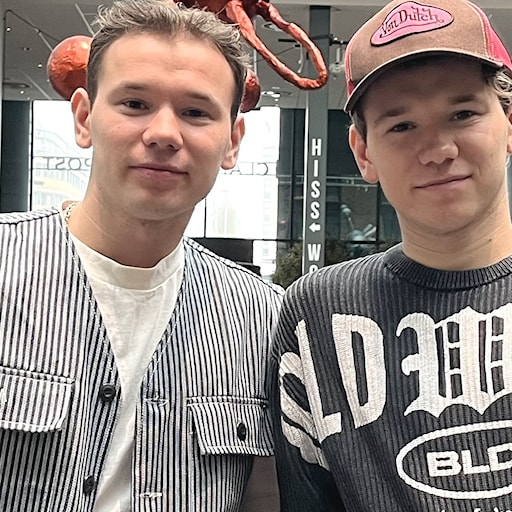
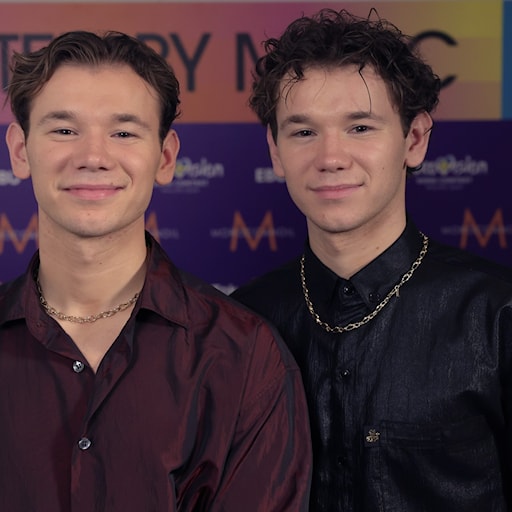
Marcus & Martinus, Sveriges representanter
Linnea Deb, Joy Deb, Jimmy “Joker” Thörnfeldt – låtskrivare ”Unforgettable”, Sverige
Andreas Lundstedt, mellanakt med Alcazar
Wijnand Speelman, radiopratare 3AM Nederländerna, vän med Joost Klein
Yoav Tsafir, director Israeliska delegationen
Jonas David, musikrepporter P3, Sveriges Radio
Lotta Myrén, nyhetsreporter, Sveriges Radio
Markus Larsson, musikreporter Aftonbladet
Kris Boswell, producent Radio Sweden
Svante Stockselius, Executive Supervisor EBU 2004-2010
Även kommentarer från:
Joost Klein, Nederländerna
Jerry Heil, Ukraina
Baby Lasagna, Kroatien
Nemo, vinnare Schweiz
Olly Alexander, Storbritannien
Petra Mede, programledare
Programledare/Producent: Carolina Norén
Exekutiv Producent: David Rune
Carolina Norén
carolina.noren@sverigesradio.se
DAGARNA SOM SKAKADE EUROVISION DEL 2, ENGLISH TRANSLATION
“The Netherlands is stopped from taking part in tonight's dressrehearsal”
“It was completely surreal [00:16] to persuade the contestants to actually go on stage.”
“ It has never been this tense and infected.”
“The fans are furious”
Voices from the Eurovision Song Contest 2024 in Malmö. My name is Carolina [00:31] Norén and I have been the commentator for this competition on Swedish Radio since 1999. And I have never been in a year like this. Now I will continue to lift the lid and find out what really happened. Welcome to [00:45] the second and final part of The Days That Shook Eurovision.
It [01:01] is Friday, May 10. It is a bit after lunchtime. And today's dressrehearsal for the final of the Eurovision Song Contest 2024 has started. There is a tension again inside the Malmö arena. [01:15] The week has been turbulent with large demonstrations out on the streets of Malmö.
“There are a lot of Palestinian flags and a lot of people. Protests against Israel's involvement in the war in Gaza.”
And the protests have also been [01:30] noticed inside the arena with booing audiences. Now the irritated tension has also begun to be noticed backstage. Some delegations and one artist have disappeared. Dutch Joost Klein. One of the [01:45] competition's most favorite singers. He was last seen when the rehearsal started at lunchtime. He was on stage then. But now he has disappeared. No one knows where he is. Or that's not true. [02:00] There are those who know. And they have asked him not to come back to the rehearsal. What really happened?
Yes, to understand that we have to rewind the tape to Thursday evening [02:16] and semi-final two. It is half past ten on [02:30] Thursday evening. The last artist of the second semi-final has just performed. It is the Netherlands and Joost Klein. And the sound of audience indicates a secure place in the final. [02:58] Joost, who at the end of his number expresses the sorrow after he lost both of his parents as a little boy of twelve. The big sign behind him on stage reads From me to my parents [03:12].
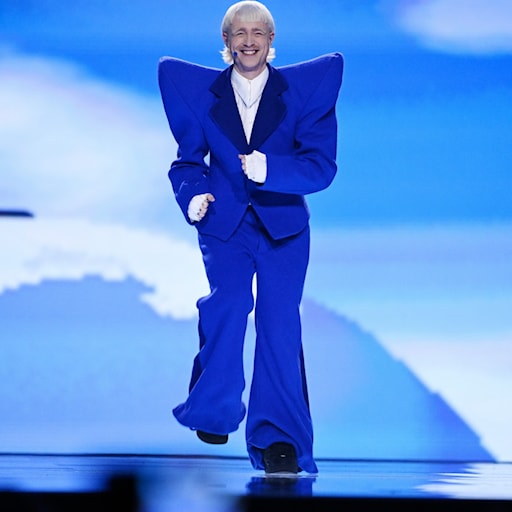
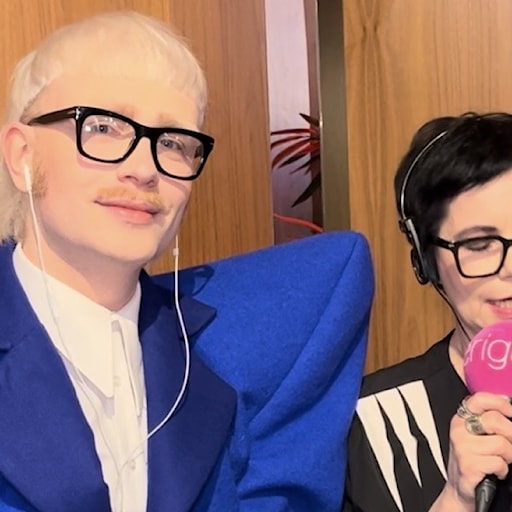
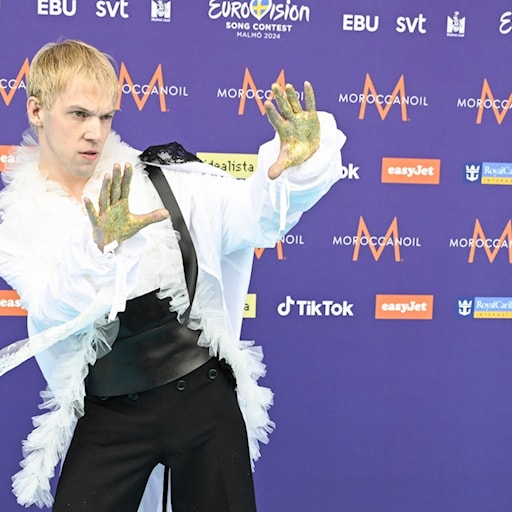
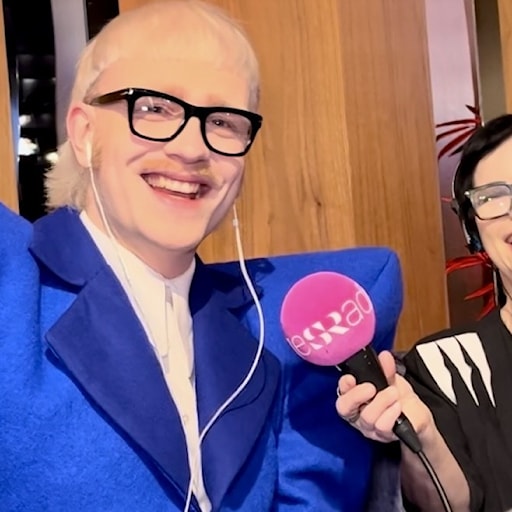
The clothes, the blue wool suit with the extremely broad shoulders, he designed it himself. And the song, Europapa, he wrote as a letter to his father. His father, who worked with refugees. Hence [03:28] the name Europapa. And the message of a Europe without borders. But the song is also a way for him to bring his parents to life. [03:57] The number ends with Joost saying goodbye to his dead parents. It is an emotional moment. But he is also in a big hurry now. He is the last one in the competition and now he has to quickly [04:12] get up to the Green Room to be seen again by the TV cameras in the Green Room, which is located one floor up in the large arena. So Joost and his dancers have quite a long way to run. And that is when it happens [04:28]. The event that Eurovision 2024 will be strongly associated with.
They were ushered off the stage and then down and out through a door and into an area where they took off what is called the in-air, that is, the [04:42] hearing aid that they have. And it is in that area that it happens so it is right next to the stage but behind you, shall we say, out in the players' corridor simply if you think of ice hockey.
One of the first people Joost passes is floor manager Henric von Zweigbergk, the studio man [04:57] who works down by the stage. Henric doesn't notice anything special when Joost rushes past.
But he was always a bit pumped up when he came off. And now it was kind of a live broadcast so he was kind of hyped up. At the time I didn't experience him as threatening or [05:12] in any way, but that must have happened in the moment afterwards.
Something has happened in the corridors. And this is how Martin Österdahl from the EBU describes the situation that has arisen.
It is an incident that has happened in the corridors. Which is a breach [05:27] of our rules. And ultimately our values. Which is about us treating each other with respect.
What exactly the incident consists of is not given. But it is serious enough for the organizer EBU [05:42], the European Broadcasting Union, to remove Joost Klein from Friday's first final rehearsal. And then we're back where we started. On Friday's first final rehearsal and a missing Joost Klein. But Joost [05:57] Klein hasn't gone up in smoke. He's actually still in the arena and has been asked to stay in his dressingroom for further information about what's going to happen next. He still believes he'll soon be on stage and singing at [06:12] Friday's first rehearsal. So he sits and waits in his characteristic Smurf blue wool suit.
But it will be many hours before he is allowed to leave the dressingroom. It is not only the Dutch delegation [06:27] that is waiting for more information. Now everyone is wondering what is happening. Speculation is starting in the arena and online. Could this have something to do with the press conference on Thursday evening when [06:42] Joost Klein was questioning why Israeli singer Eden Golan didn´t have to answer a question from a polish journalist? The already tense atmosphere backstage is now becoming even more palpable.
Then the atmosphere started to get very tense. And [06:57] suddenly you see that some of the artists are very angry and sad and some are just like what is happening? Magnus Börmark from the Norwegian group Gåte about the confusion that now prevails. No one knew what was happening. And [07:12] people from the delegation of Joost Klein, what I see is that people are frustrated with tears in their eyes and no one quite knows what is going to happen.
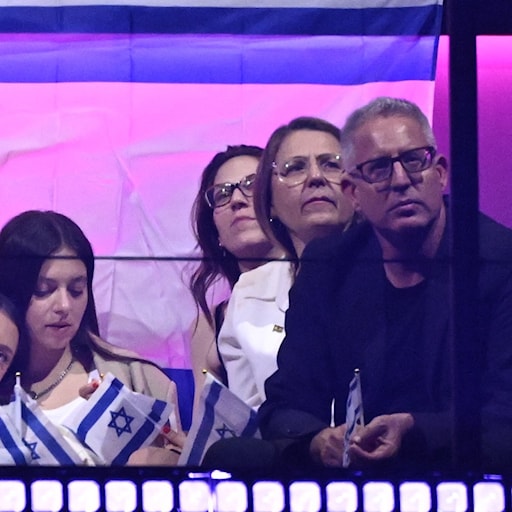
The minutes pass, which soon turn into hours. But still no [07:27] news. The EBU is in crisis meetings. And the so-called incident with the Dutch singer Joost Klein is actually not the only thing that needs to be crisis-managed. Several countries are not at the flag parade because [07:42] they reacted to the Israeli delegation's large security entourage.
They had a lot of extra security people around them the whole time and no one else there had that. And it created such an aura of intimidation [07:57]. Suddenly it becomes a far cry from Love and United by Music when you see those machine guns. Magnus Börmark from the Norwegian group Gåte who also reacts to the fact that they feel like they are being filmed against their will by the Israeli [08:12] delegation.
And they also filmed a lot, just without sparing any effort. And that created excitement.
It's still stormy at Eurovision 2024. [08:27] And filming has stressed out many backstage. Especially when you don't know who's filming. Also in the arena is Finnish artist Käärijä, who came second after Loreen in Eurovision 2023 [08:42] with his song Cha -cha -cha. Käärijä has been performing in an intermission act and now [08:57] he is scheduled to return during the final as a voter for Finland.
Last year, Malmö Eurovision, for me it's a horrible experience. Because, you know, you always have to check where you're going, who's filming [09:12] or something. Because it's so political competition.
Käärijä describes how artists are on their guard backstage. How and who they are filmed by. Magnus Börmark agrees. This is the Eurovision [09:27] when the smallest thing can be perceived or exploited politically online.
I think many artists were a little careful, mainly those who were clearly pro-Palestine. They avoided being caught in a picture [09:42] at the same time as an Israeli flag, because that can be quickly twisted when it comes to the internet.
Martin Österdahl: The Eurovision Song Contest has an accessibility that no other major [09:57] event has. We are a competition of media companies, which also means that these delegations have their own media with them everywhere. This has become a huge problem.
Yoav Tsafir, director of the Israeli [10:12] delegation, says that they were not at all looking to film or disturb any other artist. [10:30]
But the EBU is still not giving any information about either the flag parade or the Netherlands' Joost Klein.
Eurovision 2024 [10:45] is really a different year for the world's largest music competition. It is clear that a lot is about a lot more than just music. Politics, absolutely, and as part of this also [11:00] the fear of being caught on camera or filmed in the wrong context. Ironically, it will soon turn out that the so-called incident as the Dutch artist has been involved in backstage is also about filming [11:15].
And now the rumor about the incident is starting to spread on site. We hear Edward af Sillén, director and screenwriter, tell us:
Everything is quite messy here because where we are right now is in our absolute most sensitive [11:31] situation. We have managed two semi-finals, we are dead tired and now we have the biggest broadcast ahead of us, the final, which is also the least rehearsed. So you are tired and focused and then I remember that there were whispers behind the scenes that something [11:45] had happened. There has been an incident.
And while the hours go by without any more information from the EBU, the development of events has now also reached the net. The people's court that we know as the internet. Here there is now imaginative speculation [12:00] about Joost Klein's absence from the rehearsal. And many are also questioning the absence of information from the EBU. We hear Magnus Börmark again.
It must be said that there was very little [12:16] good information from the EBU to the artists. And I can say that, it was both in advance and during the competition.
Martin Österdahl, EBU: We can't inform too early either. This is a sensitive issue. And it's an issue that is under investigation [12:31]. In that time that passes when the EBU or the Eurovision Song Contest don't communicate anything, a huge amount of incorrect information and conspiracy theories are being spread about what has happened and what this is due to Joost Klein no longer [12:46] being involved. And it's clear that there was an injury that was incredibly unfortunate.
Everyone is waiting. And Friday night's rehearsal is important for another reason. Because it is after this evening [13:01] that the jury groups around Europe will vote on the artists' performance.
Just before half past eight on Friday night. Almost seven hours after Joost Klein was told to stay in his dressingroom [13:16]. And only half an hour before tonight's rehearsal with a paying audience is due to start. Yes, then comes a statement from the EBU. The investigation into the incident with Joost Klein continues [13:31]. The Netherlands is banned from taking part in tonight's rehearsal in Eurovision.
“This is Ekot (news) broadcasting live”.
The news is being broadcasted. Joost Klein has been stopped from [13:46] Friday night's last dressrehearsal. Instead, a video of his performance from semi-final 2 will be shown. The person who is given the task of explaining it to the audience will be floor manager Henric von Zweigbergk.
If I remember correctly, they broadcast the performance from the night before on the big screen like [14:01]. And the audience reacts to that immediately and know that something is wrong.
“Dutch artist will not perform live on stage tonight. [14:18] “
Around the same time that there is booing in Malmö Arena over Joost Klein's absence, an EBU-employed cinematographer walks into a police station not far from Malmö Arena. She wants to file a police report [14:33] against one of the competing artists, Joost Klein.
The police officer on duty listens, determines that it is a minor offense and decides to prosecute more quickly. This is common for minor offenses [14:48] and where the person accused of the crime should not have to wait a year or so for a trial date. The police report is classified as an unlawful threat. And what gave rise to the police report is the incident that occurred backstage [15:04] with Joost Klein.
While the rehearsal continues, the Dutch delegation receives information that Joost Klein will not be allowed to perform during the rehearsal. And also that a police report [15:19] exists. Klein is now allowed to leave his dressingroom in the arena. Confused by the situation that has now arisen, they seek contact with a lawyer. Jan -Åke Fält.
I got a [15:33] call from a Dutch lawyer who called and told me that something had happened in connection with Eurovision and that there was possibly an interrogation going on and possibly the police would be involved and that they needed [15:48] some advice and help. And I went and met them to go through and hear what had happened. What was the atmosphere like with the team then? As I understood it, it was quite stressful considering that there had been an incident and there had been pressure[16:03] during the day and that the police had become interested in it.
Jan -Åke Fält goes and meets with the team. They confer for about an hour and in the meantime the police calls and want Joost Klein for questioning. An interrogation that is to be held [16:18] at midnight. And then we went to the police station we had to go in the back door because there were suspicions that this would get a lot of attention and there were suspicions that there would be journalists waiting at the police station. So we went in the back door and came [16:33] into the police justice center here in Malmö.
Is it common to come into the police station this late for this type of crime? I'm thinking in the middle of the night, it feels quite dramatic. Yes, it's exceptionally unusual. It sometimes happens when [16:48] it's about young people who need to be questioned quickly. But in a case of this dignity, it's exceptionally unusual.
It's now been three hours since tonight's final rehearsal started [17:04] in Malmö Arena. Under the cover of darkness and by going in the back door, no one notices the small group visiting the police station. And it's also deserted inside.
Very few people [17:18] work late on a Friday night. And the attitude of the police was that they just wanted to conduct an interrogation and get that part done. How did you react to the fact that there was a suspicion of unlawful threats? Yes [17:33] based on the information I received, it didn't match up at all. How did Joost react to that accusation? He denies it.
Around now, Edward av Sillén, together with the rest of the production, is starting to think about how [17:48] this might affect the final broadcast.
It's a bit of a minefield to talk about this, also because all of us behind the scenes saw things and experienced things that we know about but that we can't really talk about. I think that it's too sensitive. But [18:03] our night was probably a wait for the EBU to disqualify them or solve it in a different way. And the only thing I felt was please please please don't disqualify. Because we had a hard time with everything because [18:18] it became so political. And what we had originally thought, that we were doing it because it's fun felt so long ago now. So it was tricky.
At the artisthotel everyone is talking about this. But no one there knows exactly what has [18:33] happened. And in the media there is a lot of speculations. Tabloid newspapers are starting to dig into Joost Klein's past. [18:48] Socialmedia is filled with posts and some TV channels like British Sky News are broadcasting live like an electionnight in anticipation of the results of the EBU's investigation. The news tops most news channels. The hours [19:04] pass. Everyone is wondering. But no one gets an answer.
It's Saturday. Final day [19:18]. It's twenty pas twelve. Just under two hours before the last rehearsal before the final. The artists are ready in their stage clothes in the hotel reception to go to the arena. The delegation buses have started to drive up outside the [19:34] entrance. Then, finally, the decision will come that will send the world's media houses into a spin. [19:55] Now the EBU is officially commenting on an incident that has been on everyone's mind since Friday lunch. The incident that occurred between Joost Klein and an EBU-employed photographer backstage in connection with Thursday's second semi-final [20:10].
The decision to disqualify Klein from Saturday's final is due to the female photographer having filed a police report against the artist and the EBU believes that while this legal process is ongoing, [20:25] it is not appropriate for him to compete. That is what can be read in the press release that the EBU is now issuing. And it concludes by stating that there is zero tolerance for inappropriate behavior in the EBU workplace [20:40]. There, one should be able to feel safe and secure, and therefore Joost Klein has violated the EBU's rules.
The news also makes history. Individual countries being disqualified has only [20:55] happened once before in Eurovision history. In 2022, when Russia and Belarus were disqualified due to Russia's war of aggression against Ukraine that same year. Both citing the fact that they could no longer demonstrate free [21:10] media. Now that the Dutch artist is disqualified and it's just hours before the final, new history is being written. Something like this has never happened before. The Netherlands' [21:25] commentator Cornald Maas has an emotional outburst in front of the cameras. Cornald criticizes the decision and says I was about to say fuck the EBU [21:40]. Which actually also slips out of his mouth.
Taco Zimmerman, director of the Dutch TV company Avrotroos, one of the highest TV executives, is now holding an impromptu press conference [21:56] for the Dutch media outside the Artist Hotel and he is emphasizing again and again that the Netherlands believes that the punishment is too harsh in relation to what happened. But it is now that the stories [22:10] are starting to diverge. From the Dutch side, it is said that there was an agreement that Joost Klein would not be filmed immediately after he comes off stage. Considering that his act ends in a very emotional way. [22:25]
Jan-Åke Fält, Joost Klein's defense lawyer: There were people from the Dutch delegation and people that we later heard as witnesses who said that there had actually been an agreement that they would refrain from filming right after [22:40] Joost came off stage.
We hear EBU's Martin Österdahl. Could it be that there has been a misunderstanding?
It sounds like there is a misunderstanding. I am not aware of any such agreement. [22:55] We have been saying that all along. As far as we know, there has not been such an agreement. And the police investigation did not really have much of a role in that decision. Do we stand behind the decision? Absolutely. Could we have done things better? Yes, certainly [23:10]. Have we learned anything? Yes.
But what has happened? Which leads to a favorite artist in the world's largest music competition being reported to the police by one of the organizer's own employees? Jan -Åke Fält [23:25] gives his view on what he has learned through his client, Joost Klein.
Yes, as far as I understand it, the artist came off the stage and was to go on to some Greenroom [23:41] in a very short time where they were to be filmed and sit and wave flags. They were in a very hurry and they were the last ones out, so it was very important that they got on. When they came off the stage, they didn't really know where they were going. And there was a plan [23:56] that they would be met by a person from the delegation, but he had not been allowed in there, right behind the stage. And when the artist starts to ask where he is going, he is instead filmed and the person filming does not answer the question. Then he [24:10] asks the photographer to stop filming and makes a move to take the camera away. And there was a film that had been handed over from the photographer already in the initial stage where this is quite clearly evident. I have a hard time understanding why they didn't just [24:25] dismiss the case right away.
This film that you're referring to, what do you see in the film?
You see exactly what I told you. That the artist comes off the stage, everyone is quite excited. He asks for directions. You also see him asking the photographer to stop [24:40] filming.
And this is how the photographer's lawyer Kristoffer Ståhl describes the incident.
My client was standing and doing her work and then this artist comes off stage and all of a sudden [24:55] walks towards my client and somehow attacks her. Then how it happened is difficult to define whether it was a push or a punch. But there was some kind of physical [25:10] contact and the artist being very upset made my client very scared and feel threatened. The punch was on the camera which then flew into my client. And I have seen this film [25:25] that exists from the incident. I can say that it is not strange that a report was made.
I actually also interviewed Jan-Åke Fält, who was the artist's lawyer. And he expressed a rather opposite opinion to you, that [25:40] in the film you can clearly see how the artist asks not to be filmed. Could that matter in any way?
No, it doesn't. Because even if it is the case that you express that [25:55] you don't want to be filmed, you are not allowed to physically attack a person anyway.
Even the prosecutor who is in charge of the case, Fredrik Jönsson, who later closes the preliminary investigation, he has also seen the film.
You can't actually see that much in [26:10] this film. It is very, very short and you don't really see what is happening. You see a movement, you don't see much more than that. You can't draw any real conclusions based on [26:25] the film that was there.
The conclusions of what you see happening in the film simply differ widely. But as for the part concerning the Eurovision Song Contest, the fact remains. The Netherlands' entry with Joost [26:40] Klein is disqualified. Klein has said afterwards that he asked them to meet the photographer and try to sort out the incident.
Yes, Martin Österdahl, did the EBU never consider sorting out what happened on site instead [26:55]?
It is clear that we discussed different solutions but this was the only thing that could really be done. Isn't it a bit ironic given this extensive discussion we have had in the film, music and entertainment industry about [27:10] how people like me and my colleagues who have the influence of power must to a greater extent stand on the side of the vulnerable employee. And the paradox is that when we do so, [27:25] we are exposed to criticism like never before. And the police investigation didn't really have much of a role in that decision, this is about threatening behavior, we have zero tolerance for that.
The Netherlands is out of the competition. [27:45] But the final will go ahead. Outside the arena, the audience begins to gather as the clock approaches eight. An unusually large number of tickets have been sold for the final [27:59] to Dutch fans because Joost Klein's entry is judged in advance to have a good chance of winning. Some Dutch fans are informed of the disqualification on their way into the arena. [28:16] They are also not allowed to bring their flags in. The EBU has a flag policy that says that only the flags of the competitors are allowed.
Lotta Myhrén, a reporter for Swedish Radio, who is interviewing outside the arena, [28:31] can easily see disappointed Dutch fans in the crowd.
They were wearing the same outfit as he was, a blue jacket with very large shoulder pads, a bit like a triangle. [28:46] They thought it was completely wrong that he had been disqualified and many believe that they were robbed of the victory, that he should have won.
Even in the Netherlands, the shock is great. Wijnand Speelman is a radio presenter on the Dutch [29:01] 3FM, but also a friend of Joost Klein.
[29:19] He's full of surprises. He has always been full of surprises because he does things his own way. That's what makes him special. In the Netherlands, many believed in winning. The song was doing so well, we thought this [29:34] is our moment of fame. He's gonna win Eurovision for us, you know, so we were in a winning mood. We all felt a little bit hurt, I guess. He was banned, but we all felt banned, maybe a little bit. [29:57]
And as the final approaches, tensions are also rising outside the stadium. Because it's not just the disappointed Dutch people there. Protesters protesting against Israel's participation are heard and seen again [30:12].
“If you compare it to Thursday's big pro-Palestinian demonstration against Israel's participation...” (radionews)
The media reports intensively. Sometimes maybe a little too intensively.
There was a time, there was a demonstration right outside the stadium [30:27]. The newspaper wrote that now they are storming the stadium. Jimmy ”Joker” Thörnfeldt, one of the Swedish songwriters. Because my family had planned to go and watch this, and then it was like this. Is it really appropriate for me to send my family [30:42] there when they start storming the stadium? But I got there and when I got there, it was as calm as could be. The media can sometimes stir things up and make us very afraid when we don´t need to be afraid [30:56].
But the big threat to the final being able to take place at all is not outside the arena. Several countries are considering dropping out. But not because of the disqualification of Joost Klein, but because they feel [31:11] that they have become a pawn in a political game now that Israel is in the final and also one of the favorites. And they do not feel satisfied with the crisis meetings they have had with the EBU and are now demanding new meetings. [31:27]
We had a situation in the queue when we were going to enter the flag parade, and artists were filmed again. And we demanded to talk to the EBU right away [31:41]. because it had now gone too far. Magnus Börmark, Norway, about which countries that now are threatening not to appear on the final stage:
It was Bambi Thug and Nemo. Yolana, Portugal. [31:57] And Greece. Maybe we were those who talked the most. There were several who would have supported it. Maybe at least five, six countries. I think they would have definitely done it if we had decided to do it. [32:13] And I think several others would have joined. We in Norway, we were completely ready for it.
I hear this an hour before we go live. Ebba Adielsson. Executive producer at Sveriges Television. It was of course an unreal [32:27] feeling. So much had happened during the week. Both on stage, behind the scenes, in the city with Koran burnings, artist threatening to drop out and various demonstrations. So you started to get a little bit used to surprises. But it [32:42] was completely surreal to have to stand half an hour before we go live with the world's biggest TV program and persuade competing entries to actually go on stage. You didn't see it coming.
One hour left until the start. Will [32:57] there even be a final? Is there even a plan for if several countries now drop out? Yes, we could have carried out the production anyway. The flag parade would have looked a bit strange, but then we would have broadcast the taped rehearsals of [33:13] the artists who had not shown up in that case and they would of course have been out of the competition.
So there could have been several countries out of the competition. And a completely different winner. Because Swiss [33:27] Nemo was among those who considered dropping out. But the chaos surrounding Eurovision 2024 does not end there. While several countries are considering leaving [33:42] the competition, there will be a other dropouta. Now among those who will cast tonight's juryvotes.
Norway's Alessandra Mele withdraws and refers to the war in Gaza on her social media. Finland's Käärijä [33:57] who is friends with the Netherlands' Joost Klein also drops out and refers to how he is very sad about the disqualification. [34:15] And the Netherlands' well-known influencer and former Eurovision presenter Nicky Di Jaeger has, in consultation with the television company Avrotros, decided not to give the country's votes as a protest. [34:29] Because even though the country no longer has a representative in the final, the Dutch people will still be able to vote. But now the voting points from the Netherlands will be given from EBU's Martin Österdahl instead. A moment [34:44] that will also be written into Eurovision history.
And down in the press room, the disqualification is still a hot topic. We hear the newspaper Aftonbladet's reporter on site Markus Larsson. It's very, very infected and a lot of fuss [34:59] right now. The problem is that we don't really know what happened. The Dutch delegation says one thing and the EBU says another. But there are many conspiracy theories out there. It's just one more thing this week that makes this start to feel more and more like a competition that we just want [35:14] to be over.
It feels like everyone is very, very on their toes and nervous and stressed and irritated. Artists, delegations, the press, the fans if nothing else. The fans are a lot of them. [35:30] So furious. Kris Boswell, producer, Radio Sweden. I checked the statistics on how many people, as well as which countries, have bought tickets to the final and Holland was in third place. So there will be a lot of disappointed Dutch people there in the arena too.
Markus Larsson [35:44] again. It has never been this tense and infected before.
Sitting and working here in the press room, how have you experienced this week?
It is chaotic and it is not violently chaotic but it is chaotic. There are many such decisions, there are disqualification. There are protests against Israel. [35:59] It is Israel, Israel, Israel, Israel, Israel and everything will be about Israel all the time. This is the kind of year it is and when Israel is involved, I don't know, we will have to analyze afterwards how the EBU handled this whole situation. Should countries that are in [36:14] major wars be involved in the competition? Should countries accused of human rights violations or crimes against humanity be allowed to compete that year? I don't know. Because now it's going to be like this. This is what it's going to be like tonight. Listen now. Israel has a great [36:29] song. Easy top five. But the fact that she's on the betting now as second to win, it's not just because of the music. It's because this is going to be a vote for or against Israel. [36:46]
There are now 30 minutes left until the final. Norway's Magnus Börmark. We´ve had the last crisis meeting. And EBU expelled a person from the Israeli delegation, they have also moved the delegation out of the bubble. So [37:00] they had taken some action. Yes, it turned out a bit like that. Okay, let's go, then we'll just do the shit and then we'll just have to see how it goes.
Norwegian group Gåte decides to stay in the competition. And the other countries that also planned to drop out follow Gåtes decision. [37:15] They think that the EBU has made some efforts. Like one person in the Israeli delegation being stripped of their accreditation. And that the entire Israeli delegation is forced to move their dressingroom away from the others [37:30].
Yoav Tsafir, director of the Israeli delegation, does not share the view that they were disruptive. But they agree to move the lodge.
They came and they told us this is their decision. I told my friend, we are not going [37:45] to argue. We really were polite, we didn't do anything. But some other delegations said that they are not going to sing if we don't do it. So let's do it. I don't want to be the problem. I don't want to do problems. I didn't come to fight with anybody. We [38:00] are a friendly delegation that only come to do artistic work. And the second we heard from the EBU that people don't want to go to the stage if we won't go to another room, so we went to another room. I didn't think it was right. But I told my friends [38:15], let's not fight about it. Let's just go to another room and let the show begin.
The Israeli delegation moves from the artist bubble when the EBU asks for it. We don't want to argue. Let the show begin, says Yoav Tsafir. [38:32]
You can't say here that the Eurovision slogan United by Music characterizes the 2024 competition. But now the final will finally take place. Let the Eurovision Song Contest begin [38:47]!
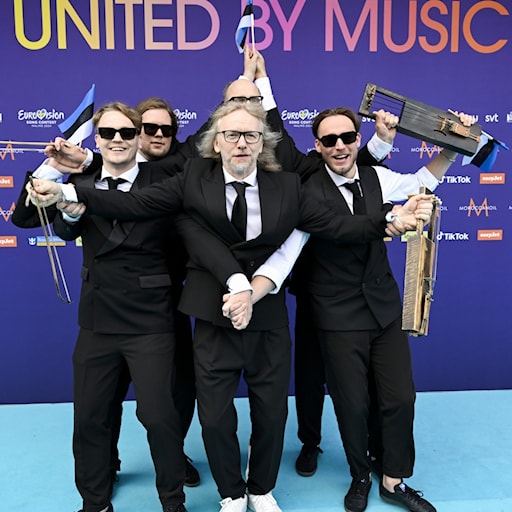
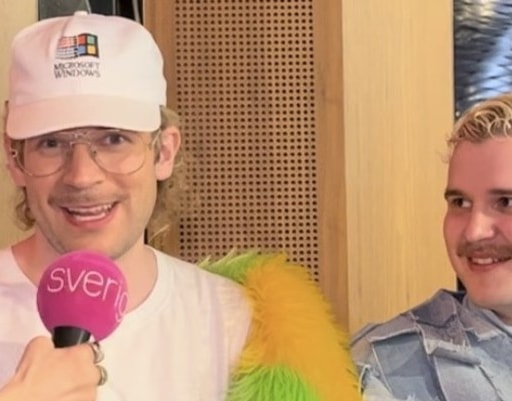
The Swedish entry Unforgettable with Marcus & Martinus opens the [39:02] evening. Other memorable performances include Finnish Windows 95 -man with his scantily clad shorts number with his own designed fireworkshose. And Estonia [39:17] manages to combine folk music with rap. This with the most unusual costumedance of the evening. And Italy is always in the top battle. [39:33] And who can forget Loreen's interlude where she half-lying down bicycles through her new song. Forever.
(News) “This [40:00] is Ekot at ten. The final of the Eurovision Song Contest is in full swing in Malmö...”
And soon it will be noisy again on [40:14] the inside of the arena. We will find out how the jury groups has voted. But first, the EBU's Martin Österdahl will certify that the voting has been correctly done with the catchy words You're good to go.
Executive supervisor Martin [40:30] Österdahl. What can you tell us about the result? Good evening. So the moment of truth has arrived. I can tell you that we've checked and verified all of the results. And we're ready to start revealing the results of [40:44] the grand final result. So with that, Malin and Petra, you're good to go.
The audience boos Martin Österdahl. Something like this has never happened before in the competition.
I expected that [41:00] the EBU would be booed. The conflict in the Middle East is so incredibly divisive. Then it's the case that we hadn't foreseen this with Joost Klein. The troubled road leading up to the broadcasts [41:14] in Malmö, it was largely due to the Middle East conflict. Then the most intense end of it was the disqualification of Joost Klein. I understand that's why they booed me.
But it's not over for Martin Österdahl [41:29]. He will also deliver the votes of the Dutch jury, since their voter dropped out in protest at the disqualification of Joost Klein.
Now, for the results from the Netherlands, I turn to Martin [41:44] Österdahl. Yes, hi, we have no spokesperson contact with the Netherlands tonight, but the 12 points from the Dutch jury goes to Switzerland. Switzerland, 12 points [41:59]. La Suisse, 12 points. (booing)
I was mentally prepared for this to happen. I had my youngest daughter in the arena. I had the opportunity to meet her before and explain. She's only 11 years old. 10 years old then. And I explained [42:14] to her, like, this could happen. It's not personal. It's not dangerous. And so on. It felt good. But of course it wasn't fun. I mean, I'm just a regular human being of flesh and blood like everyone else. [42:29] And it wasn't a pleasant situation. But I was focused on the job that I had to do.
Martin did not decide on the disqualification alone. Within the EBU, many people were involved in the decision. A reference group, an executive board [42:44], managers above him. There was between 18 and 20 people involved.
Martin Österdahl: Since the executive supervisor is the person who sits and waves in the arena at one point, There is very much focusing on that function, the role and that person.
It will be [42:59] a tough evening for Martin Österdahl. But Edward af Sillén also finds the evening challenging.
I also feel that the top cap went. I think what we were trying to do was just to get to the finish line. This was a very, very tough evening for all of us. [43:14] I remember that all I wanted was to finish and go home, to be completely honest. It was a tough evening.
Eurovision week is coming to an end. Soon we will all be able to go home. After a week that has shaken Eurovision. [43:29] It has been a mess. With political statements, a police report, a historic disqualification, an upset audience and artists who towards the end of the week are almost starting to be afraid of each other. But how is it going [43:44] in the competition itself? Who will win?
“Our 12 points Switzerland! Our 12 points SWITZERLAND! [44:00] 12 points! Nemo, Switzerland!”
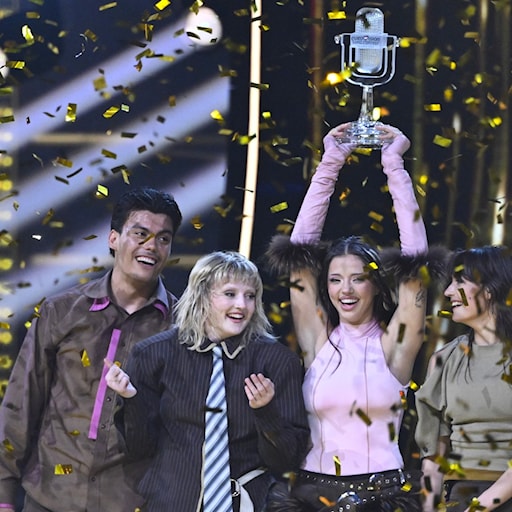
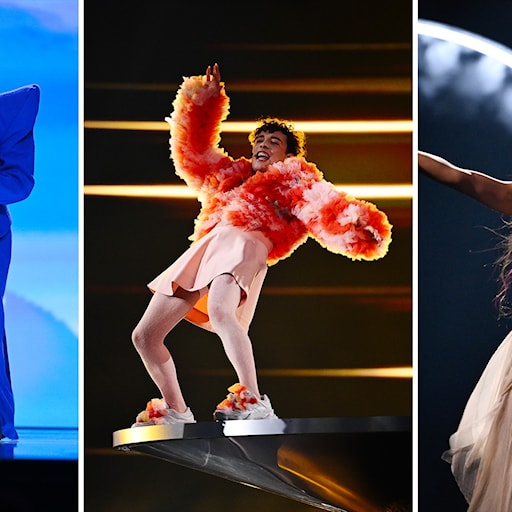
Nemo [44:17] from Switzerland wins. Nemo who was close to dropping out. The evening ends symbolically, however, for maybe the whole Eurovision week [44:32]. When Nemo accidentally breaks their glasstrophee on stage. Something they comment on at the press conference afterwards with the words. I broke the code and I broke the trophee, maybe the trophee can be fixed. [44:46] Maybe Eurovision needs a little bit of fixing too.
Nemo who hopes that both their glasstrophee and also the Eurovision music competition can be fixed. But the Eurovision Song Contest [45:01] 2024 is not over. The aftermath will continue long after the final has been brought home.
On the internet, it is noticeable from whatever EBU publishes on its social media, Eurovision fans [45:16] write thousands of posts with hashtag “Free Joost” or “Justice for Joost”. And in the Netherlands, people continue to support their artist after the competition. For example, church bells all over the Netherlands are asked to ring Europapa [45:31] at a certain time. This is what Wijnand Speelman, a radio host on 3FM in the Netherlands and a friend of Joost Klein, told us:
After the disqualification we felt so bad for him that [45:46] we asked the church bells, the churches in the Netherlands to ring Europapa on the same day at 12 noon. So we had a lot of church bells ringing at the same day, Europapa, through the whole of the Netherlands [46:01]. It was big news, it was a big thing in the Netherlands. Just to support him.
And this is what it sounded like when Joost Klein's song Europapa was sung by church bells in Holland.
[46:22] But Joost Klein is still under investigation by the police in Sweden for unlawful threats. And only in August, three months after the final, does prosecutor Fredrik Jönsson come with a statement, the preliminary investigation is closed [46:37].
It was a comprehensive assessment that I made based on all the information that was in the case and then it was, among other things, witness information that was available, that is, witnesses who were in Sweden. But then also the witnesses that we [46:52] heard in Holland.
Is it common that witnesses perceive the situation differently?
Yes, but it can be, especially when it is a rapid sequence of events, it can absolutely happen that different [47:07] people perceive things in different ways. It is nothing unique to this incident.
A week or so after the preliminary investigation was closed, Joost Klein will return to Sweden for the first time since Eurovision for a gig [47:22] in Uppsala.
I'm a free man!
But Joost Klein was not alone in that corridor backstage. There was also [47:37] a plaintiff, the EBU photographer. What exactly happened between them may never be completely clear. The photographers have also declined to participate in this program. But this is how lawyer [47:52] Kristoffer Ståhl tells us about how his former client is feeling today. She has had to endure an extreme amount of hatred and threats. She has been afraid for her life. She is doing well under the circumstances, moving on with her life and will hopefully [48:07] continue to be a prominent photographer.
Eurovision 2024 will be a year that will go down in history. And it has already left its mark. In late autumn 2024, the EBU will issue [48:22] a whole package of new, stricter rules. Or at least clearer rules. Filming is prohibited backstage without permission. The artists will have an area where they can be completely alone. And in addition, a person who [48:37] is responsible for the well-being of the participants will be introduced.
A competition that for a long time seemed to have more losers than winners may still be able to rise. But the core question. Will the competition that once started [48:53] to unite Europe after the Second World War manage to remain apolitical? What do those involved say?
Martin Österdahl, EBU: The bigger problem is how people and media choose [49:08] to handle the Eurovision Song Contest outside the universe that we ourselves control.
Ebba Adelsson, Sveriges Television: There have always been and will always be people who try to make politics out of their or others' participation in the Eurovision Song Contest [49:22]. And I think that is inevitable.
Magnus Börmark, Norway: No! It don´t think so.
Yoav Tsafir, Israel: Well, I hope so. And I hope that the judges will vote not in a political way.
Linnea Deb [49:37], songwriter: I'm so crazy but I think like this, let´s make a competition that is political. Everyone gets to sing exactly what they think is terrible or good. And then we'll see how it goes.
Svante Stockselius, Executive Supervisor for Eurovision from 2004 [49:52] to 2010: It is political and it is not surprising that it is because the whole world's spotlight is directed at the event. And many political profiles , from the government and presidents [50:07] and so on, try to exploit this. So the important thing is that as an organizer you make sure that it does not become a political event.
[50:22] We'll see how political the Eurovision Song Contest will be in the future. And whether there will be as much headlines around this year's competition. The countdown has begun. And one thing is as usual. I [50:37] will analyze this year's songs together with Eurovision experts Björn Kjellman and Kris Boswell. And you'll hear that in the third episode of this Eurovision special. And all the people interviewed in this program you can [50:52] hear longer interviews with in our app Sveriges Radio Play. Technicians have been Tobbe ”Sjökexet” Carlsson, Lotta Linde-Rahr and Maria Stockhaus. Executive, producer David Rune. My name is Carolina Norén [51:08].